Friday, March 18, 2022

HOMILY – Third Sunday of Lent – Go Low to Go High

                                       ________________________________________

                 
          Our theme this Lent is:
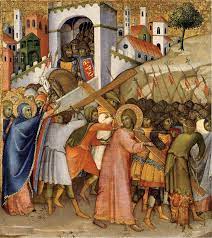
Choosing the road that leads up to Calvary. The only real high road.
 

When we take the high road, sometimes we have to go low.

No, that does not mean we take the low road, but we do have to go low.

What is meant by that?

In our current culture, it’s all about upward mobility:

          Finding the better job. Living in the bigger house. Driving the fancier car.

In the kingdom, it’s all about downward mobility (going low):

Uniting with the poor and marginalized.

Serving the unhoused, the undocumented, the prisoner, the outcast, the sick and dying.

Rejecting the trappings of a warped culture of comfortability and entitlement.

Where are we on this spectrum? 

          This coming Thursday, we will remember the life of a new saint in the Catholic Church: St. Oscar Romero, Bishop and Martyr.

He was canonized October 14, 2018.

With Maryknoll, I was blessed to lead a pilgrimage to San Salvador, El Salvador, for the first official celebration of St. Oscar Romero’s feast day: March 24, 2019.

Archbishop Oscar Romero was assassinated on Monday, March 24th, 1980, while celebrating Mass at a chapel near his home.

March 24th used to be a day of sad remembrance. Now it is a day of celebration for one of the Church’s newest Saints.

          I had the honor to celebrate Mass at the Hospitalito chapel where St. Romero’s life ended.

The first time was with Maryknoll in 2013. During the recitation of the Our Father, I realized I was standing on the exact spot where his body fell and he died after being shot by a sharpshooter’s bullet. It was a powerful moment of reflection for this then newly ordained deacon. 

The fig tree parable in Luke’s Gospel is much different than that found in Matthew and Mark. The parable there was about a cursed tree that bears no fruit, an allusion to the Temple and the leaders of the Jewish faith at the time of Jesus.

          Here in Luke, the fig tree analogy is different. Jesus describes the fig tree owner as patiently waiting three years for the tree to bear fruit. The moral of the story here is about the God of second chances.

Oscar Romero was brought up in by a middleclass family and formed in Rome.

When he was made Archbishop of San Salvador, many thought he would maintain the status quo where the rich took advantage of the poor.

He had been an Auxiliary Bishop in San Salvador and Bishop of the poor Diocese of Santiago de Maria and was not remembered as a champion of the poor then.

But a major event early in his tenure as the pastoral leader of El Salvador changed his perspective. Three weeks after being installed as Archbishop of San Salvador in 1977, his dear Jesuit priest friend was brutally murdered in the nearby community Aguilares along with two other Salvadorans, a teenage boy and an elderly man.

         The military Junta was suspected from the start.  

Fr. Rutilio Grande was an outspoken proponent of peasants’ rights and preached against injustice and oppression of his poor community of campesinos.

He was the first priest to be assassinated just prior to the Salvadoran Civil War. Many other priests would be killed during that Civil War.

This past January, Fr. Rutilio Grande was Beatified in San Salvador by Cardinal Gregorio Rosa Chavez.

          We walked for five miles in a parade through the streets of San Salvador to the first Feast Day Mass for St. Oscar Romero in 2019 with Cardinal Gregorio who was treated like a rockstar by young people asking to take selfies with him. It was quite a sight.

Cardinal Gregorio was Archbishop Oscar Romero’s Auxiliary Bishop and was passed over 17 times for promotion before Pope Francis elevated him to Cardinal in 2017.

A sign of love from the God of second chances.

As for Romero, his second chance came when his friend was killed, and he had to choose: the poor and marginalized? Or the rich and powerful? Upward mobility? Or downward mobility?

By becoming the voice of the poor he knew someday he might suffer the same fate as his Jesuit friend.

          But that is when his words became powerful and prophetic.

Take for instance this homily at a Mass in Aguilares shortly after his friend was killed:

“We are here today to retake possession of this church building and to strengthen all those whom the enemies of the Church have trampled down. You should know that you have not suffered alone, for you are the church; you are the People of God; you are Jesus, in the here and now. He is crucified in you, just as surely as He was crucified 2000 years ago on that hill outside of Jerusalem. And you should know that your pain and your suffering, like His, will contribute to El Salvador’s liberation and redemption.”

Or the homily he delivered moments before his execution three years later.

This Gospel passage from John that led into the homily was prophetic in its own right:

          “The hour has come for the Son of Man to be glorified. I assure you, unless the grain of wheat falls to the ground and dies, it remains infertile. But if it dies, it produces a great yield.”

           Here’s what Archbishop Oscar Romero said in a homily moments before his death:

“Many do not understand, and they think Christianity should not get involved in such things (as championing the poor). But, to the contrary, you have just heard Christ's Gospel, that one must not love oneself so much as to avoid getting involved in the risks of life which history demands of us, that those who would avoid the danger will lose their life, while those who out of love for Christ give themselves to the service of others will live, like the grain of wheat that dies, but only apparently. If it did not die, it would remain alone. The harvest comes about because it dies, allows itself to be sacrificed in the earth and destroyed. Only by destroying itself does it produce the harvest.”

Moments after delivering this homily, an assassin’s bullet pierced his heart as he lifted the chalice during the beginning of the Eucharistic prayer.

He died in the arms of the nuns who ran the hospital and hospital chapel.

         God calls us to die to ourselves and rise again in him.

No doubt Oscar Romero knew that he might die for speaking truth to power. And so, it is with all of us.  

We are not called to take the easy road, the low road.

We are called to take the high road, the difficult road, the road to Calvary.

We are called not to be upwardly mobile, but downwardly mobile. Not to seek the higher things. But accept the things that can lead to suffering and despair.

It’s only by going low that we walk the road to Calvary with Jesus and find our salvation.

Saturday, March 5, 2022

HOMILY – First Sunday of Lent – Temptation

                                          ______________________________

          Fr. Bryan's and my preaching theme this Lent is: Choosing the road that leads up to Calvary. The only real high road. 

Life is hard. Sometimes we prefer the easiest path – one without suffering or pain or sorrow. But Jesus tells us we all must carry our crosses if we are to follow him.

You’ve heard it said, there is no resurrection without the cross.

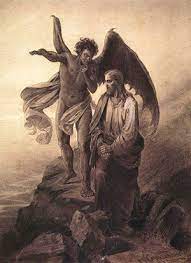
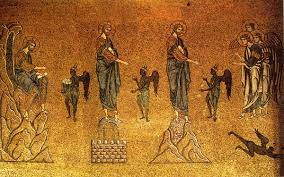
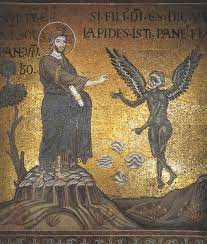
This week Jesus is being tempted by the devil in the desert, seduced by three temptations (the three-p’s): pleasure, power, and prestige.

Jesus is tested -- all the way up to Calvary and the cross.

And, as we know, he always takes the high road. And he always passes the test.

         This week we also are looking at our response to temptation.

How do we deal with temptation? How do we deal with evil? How do we deal with the devil?

We hear in the Lord’s Prayer, “lead us not into temptation.”

How does God “lead” us into temptation? It is a question some may ask.

God doesn’t lead us into temptation.  The Evil one does.

And we need God’s protection to battle the snares of the devil.

First, the antidotes to the devil’s temptations of pleasure, power and prestige are the three pillars of our Lenten journey: fasting, prayer and almsgiving, the first fruits of our relationship with God.     

Fasting helps us to conquer the sin of pleasure.

           Prayer for God’s will in our lives helps us to conquer the sin of desiring power or control.

Almsgiving (without anyone noticing) helps us to conquer the sin of prestige.

Lent is a time to call us back to these disciplines as we enter our own deserts.

In Luke’s Gospel we see a bunch of scenes of Satan trying to regain control of the world by taking away the word of God from people’s hearts.

Jesus is fasting and praying as he walks in the desert, facing the devil’s temptations, and all the while he is discerning a new way of living – a way totally focused on serving to the poor and marginalized, the outcast and outlaw, the despised and disposed. 

Jesus is about to build a community on a foundation of love and mercy.

This is the way of Jesus.

Luke's Gospel ties nicely to today's first reading from Deuteronomy.

Each of Jesus’ temptations was faced by the Hebrew people during their 40-year Exodus in the desert.  

They were tempted to believe that God had abandoned them or that they were being punished by God. 

Do we sometimes feel that way as we wander through our own personal deserts

          The devil continually whispers false things about God into our ears, turning God into something small and controllable in our eyes. Making God into an idol; a genie we can ask to grant our every wish.

Our faith life must always be one of continual idol-busting. Because God is not some puppet or creature under our control. God is always bigger than we can imagine.

We are not called to a one-sided objectification of God, but instead each of us is called into authentic relationship with God, a personal relationship with Jesus.

Do you have an intimate relationship with Christ?

Then there’s the devil. Yes, the devil is real and continually tempting us.

Truth is some people feel uncomfortable talking about the devil. The concept smacks of ancient superstition for many.  But whether or not we believe in the devil, we can all agree evil is real. 

          We need only look at the events in Ukraine to see a human example of evil rearing its ugly head in the world.

God is found in the brave actions of the men and women of Ukraine defending their nation by laying down their bodies in front of tanks. God is found in the brave leadership of a young President who believes he might die leading his country. God is found in our prayers for Ukraine, our almsgiving to the peoples there, and our fasting for peace on Ash Wednesday as Pope Francis asked us to do.

Evil is found in the bombing of civilian (not military) targets to grow an oppressor's empire. Evil is found in Russian missiles terrorizing old people, mothers with children and young men who have never experienced war. Evil is found in the lies told to Russian soldiers about how they will be received in Ukraine.

Take for instance the last text message found on the cell phone of teenage Russian soldier moments after his death.

          The text was read by Ukraine’s Ambassador to the United Nations during an open session this week. Here’s the full transcript of the text message sent by a teenage Russian conscript to his mom:

“Mom, I’m in Ukraine. There’s a real war raging here. I’m afraid. We are bombing all the cities together even targeting civilians. We were told that they would welcome us. And they are falling under our armored vehicles. They’re throwing themselves under the wheels and not allowing us to pass. They call us Fascists. Momma, this is so hard.”

Moments after sending this text to his mother the young soldier was killed.

          Everything he was told about the mission into Ukraine was a lie. This Russian teenager spent his time in the desert and was led to his death by the lies of the devil.  

Compare that to a viral video showing the humanity of Ukrainians feeding a hungry captured Russian soldier and letting him call home to his mother on a video chat. 

As we walk through the desert on our own 40-day Lenten journey, we will face temptations, too. The temptation to look away from the misery and suffering. The temptation to be ambivalent to the struggles of people in faraway lands.  The temptation to demonize young Russian soldiers instead of understanding they were lied to by their leaders.

Temptations supplant God with idol worship of our own making. It lulls us into thinking what’s bad is good and what’s good is bad. It warps our souls and brings about death and destruction.

          My prayer for us all is that we will open our eyes to the evils that surround us, and do as Jesus did: stand up to evil and say “no.”

We do this through fasting, prayer, and almsgiving. These Lenten practices are the path to salvation, and antidotes to the temptations of pleasure, power, and prestige.

Christ shows us today how to effectively rebuke the devil and turn away from his evil ways.

Jesus shows us his way, the only way – to choose the road that leads up to Calvary. The only real high road. 


Friday, February 11, 2022

HOMILY – Sixth Sunday in Ordinary Time – Elevation (English and Spanish)

                                        _________________________________

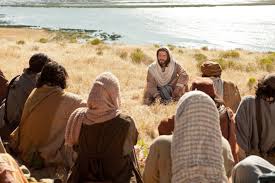
           This weekend, Jesus is not preaching his Beatitudes on a mountain (as he does in Matthew’s Gospel), he’s preaching his Beatitudes on a plain. On level ground.

But that doesn’t mean that Jesus isn’t still talking about elevation in Luke’s Gospel.

           The Oxford dictionary defines the word elevation this way:

                                 The action or fact of elevating (something).

           Jesus is elevating something important for us this weekend and wants us to take notice.

           In the time of Jesus (and for many today), it was believed that only the wealthy and prosperous were worthy of God’s abundant blessings.

This is why the rich had no struggles. They were “blessed” by God who was taking care of them and their many endeavors.

Conversely, the poor and marginalized were cursed by God.

           But Jesus comes along to turn that thinking on its head.

           For years before Jesus, Hebrew scriptures pointed to the poor and oppressed as those deserving special attention. The prophets spoke of this often over the centuries before Jesus. But people didn’t listen. Are we listening today?

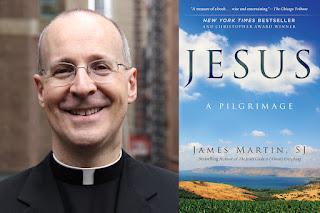
           As author of Jesus, A Pilgrimage, Jesuit Fr. James Martin says, “But Jesus goes beyond that, elevating them in his reign and offering them as models of discipleship. (The poor and oppressed) provide a partial sketch of character traits, attitudes, and virtues befitting disciples.”

           The Beatitudes are often referred to as “the Gospel within the Gospel.”

           Luke situates this Beatitudes on level ground, not on a mountain. He has just come off a mountain after naming his twelve apostles.

            The first thing he does after this is to address a “great multitude” of people with his Beatitudes. In his message is a set of operating instructions for his disciples (especially the Twelve).

           In other words, his message is intended for everyone.

Yes, even us.

           No doubt many in the crowd were elated to hear they were counted among the blessed.

He’s basically promising the poor and oppressed that they, too, can share in the reign of God. Not just the rich. This was revolutionary thinking at the time. Is it still revolutionary thinking?

           If we closely examine the Greek word used by Jesus for the poor, we have a clearer picture of his message: ptochoi is the word used. It means beggar.

           Imagine if we proclaimed, “Blessed are the beggars.”

How many people hearing that might bristle at the thought that the homeless people found in abundance here in Seattle are blessed?

           But this is what Jesus is proclaiming.

           In our society today (and the society in Jesus’ time), the poor, the beggars were seen as “lazy” or “foolish” or even “losers.”

           These are people set aside by society as human trash. Marginalized for how they live and survive in a land of plenty.

           These are the people Jesus is talking about today.

           For our Sacred Encounters missionaries, “Blessed are you when people hate you, and when they exclude you, revile you, and defame you on account of the Son of Man.”

           As Fr. Martin reminds us, “Embedded in the Beatitudes is the recognition that some disciples will be thought of as people who don’t matter.”

           These are people worthy of our love and attention.

           “The ones on the bottom are (now) on top. The ones who are ignored are celebrated. The ones who are pushed aside are given a pride of place… Blessed are they (indeed).”

           As Pope Francis reminds us, “we can learn much from the poor.”

Those without wealth, power or status have a natural dependence on God for their daily needs. This is who Jesus wants us to be like.

           I remember a time when a new homeless woman appeared for the first time on the streets in Everett. She’d just gotten off a train from out of state with a brand, new duffel bag, a little therapy dog and a sweet disposition. She was in her 50s.

           Our homeless friends were the first to point her out to us and say, “She’s a target. She will be robbed. Can you do something to help her?”

           We put the woman up in a hotel and then worked to get her into a woman’s shelter that allows animals based in Bellevue.

           The kindness and generosity of our unhoused friends can be overpowering at times.

I cannot tell you how many times we hear the words “God bless you” every time we’re out. Or see someone we’ve given a blanket to offer that same blanket to another person when we run out of blankets.

These experiences are good reminders of the Beatitudes lesson Jesus is speaking of today.             

           Jesus is calling us all to be people of the Beatitudes.

           Fr. Martin says, “Jesus is saying that more than helping the poor and more than working to combat the systems that keep them poor, we must become like them – in their simplicity, generosity and dependence on God.”

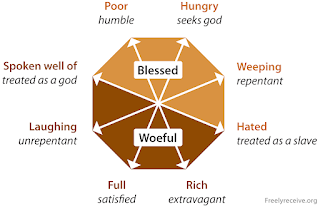
           Here’s an interesting fact for reflection: the word “blessed” in Greek carries two meanings: “blessed” or “happy.”

           Now, let’s change this weekend’s reading and I challenge you to ponder this:

           Happy are you who are poor,
                        for the kingdom of God is yours.
            Happy are you who are now hungry,
                        for you will be satisfied.
            Happy are you who are now weeping,
                        for you will laugh.
            Happy are you when people hate you,
                        and when they exclude and insult you,
                        and denounce your name as evil
                        on account of the Son of Man.

Rejoice and leap for joy on that day!”

            Maybe Jesus is giving us the key to happiness in the Christian life: by embracing simplicity and living the Beatitudes.


                                  ___________________________________


HOMILIA – VI Domingo Ordinario Time – Elevación


           Este fin de semana, Jesús no está predicando sus Bienaventuranzas en una montaña (como lo hace en el Evangelio de Mateo), está predicando sus Bienaventuranzas en una llanura.

Pero eso no significa que Jesús todavía no esté hablando de elevación en el Evangelio de San Lucas.

           El diccionario Oxford define la palabra elevación de esta manera: La acción o hecho de elevar (algo).

           Jesús está elevando algo importante este fin de semana y quiere que nos demos cuenta.

           En el tiempo de Jesús (y para muchos hoy), se creía que sólo los ricos y prósperos eran dignos de las abundantes bendiciones de Dios.

Por el contrario, los pobres y marginados fueron maldecidos por Dios.

           Pero Jesús viene a darle la vuelta a ese pensamiento.

           Durante los años antes de Jesús, las escrituras hebreas señalaron a los pobres y oprimidos como aquellos que merecen una atención especial.  Los profetas hablaron de esto a menudo a lo largo de los siglos antes de Jesús. Pero la gente no escuchó. ¿Estamos escuchando hoy?

           Como dice el autor de “Jesús, Una peregrinación”, el Padre jesuita Jaime Martin: "Pero Jesús va más allá de eso, elevándolos en su reinado y ofreciéndolos como modelos de discipulado. (Los pobres y oprimidos) proporcionan un bosquejo parcial de los rasgos de carácter, actitudes y virtudes propias de los discípulos".

           Las Bienaventuranzas a menudo se conocen como "el Evangelio dentro del Evangelio".

           San Lucas sitúa estas Bienaventuranzas en un terreno nivelado y no en una montaña. Acaba de salir de la montaña después de nombrar a sus doce apóstoles.

            Lo primero que hace después de esto es dirigirse a una "gran multitud" de personas con sus Bienaventuranzas. En su mensaje hay un conjunto de instrucciones operativas para sus discípulos (especialmente los Doce).

           En otras palabras, su mensaje está destinado a todos.

Sí, incluso nosotros.

           Sin duda, muchos en la multitud estaban eufóricos al escuchar que eran contados entre los beatos.

Básicamente está prometiendo a los pobres y oprimidos que ellos también pueden ser parte del reino de Dios. No solo los ricos. Este era un pensamiento revolucionario en ese momento.

           Si examinamos de cerca la palabra griega utilizada por Jesús para los pobres, tenemos una imagen más clara de su mensaje: ptochoi es la palabra utilizada. Significa mendigo.

           Imagínese si proclamáramos: "Dichosos los mendigos".

¿Cuántas personas que escuchan eso podrían erizarse al pensar que personas sin hogar que se encuentran en abundancia aquí en Seattle son bendecidos?

Pero esto es lo que Jesús está proclamando.

           En nuestra sociedad actual (y en la sociedad en el tiempo de Jesús), los pobres, los mendigos eran vistos como "perezosos" "tontos" o incluso "perdedores".

           Estas son personas reservadas por la sociedad como basura humana. Marginados por cómo viven y sobreviven en una tierra de abundancia.

           Estas son las personas de las que Jesús está hablando hoy.  

           Como nos recuerda el Padre Martin, "Incrustado en las Bienaventuranzas está el reconocimiento de que algunos discípulos serán considerados como personas que no importan".

           Estas son personas dignas de nuestro amor y atención.

           "Los de abajo están (ahora) arriba. Los que son ignorados son celebrados. A los que son dejados de lado se les da un lugar de honor ... Bienaventurados son ellos (de hecho)".

Nos recuerda el Papa Francisco, "podemos aprender mucho de los pobres".

Aquellos sin riqueza, poder de estatus tienen una dependencia natural de Dios para sus necesidades diarias. Esto es lo que Jesús quiere que seamos.

           Recuerdo un momento en que una nueva mujer sin hogar apareció por primera vez en las calles de Everett. Acababa de bajar de un tren de fuera del estado con una nueva bolsa de lona, un pequeño perro de terapia y una disposición dulce.

           Nuestros amigos sin hogar fueron los primeros en señalarla y decirnos: "Ella es un objetivo. Le robarán. ¿Puedes hacer algo para ayudarla?"

           Pusimos a la mujer en un hotel y luego trabajamos para llevarla a un refugio para mujeres que permite animales con base en Bellevue.

La amabilidad y generosidad de nuestros amigos sin hogar puede ser abrumadora a veces. No puedo decirte cuántas veces escuchamos "Que Dios te bendiga" cada vez que salimos. O ver a alguien a quien le hemos dado una manta, ofrecer esa misma manta a otra persona cuando nos quedemos sin mantas.

Estas experiencias son buenos recordatorios de las Bienaventuranzas de las que Jesús está hablando hoy.     

Jesús nos está llamando a todos a ser personas de las Bienaventuranzas.

El Padre Martin dice: "Jesús está diciendo que más que ayudar a los pobres y más que trabajar para combatir los sistemas que los mantienen pobres, debemos llegar a ser como ellos, en su simplicidad, generosidad y dependencia de Dios".

Aquí hay un hecho interesante para la reflexión: la palabra "bendito" en griego tiene dos significados: "bendito" o "feliz".

Ahora, cambiemos la lectura de este fin de semana y los desafío a reflexionar sobre esto:

           "Felices son ustedes que son pobres,

                        porque el reino de Dios es suyo.

            Felices son ustedes que ahora tienen hambre,

                        porque estarán satisfechos.

            Feliz son ustedes que ahora están llorando,

                        porque se reirán.

            Feliz son cuando la gente los odia,

                        y cuando los excluyen e insultan,

                        y los llaman malvados

                        a causa del Hijo del Hombre.

¡Regocíjense y salten de alegría en ese día!"

Tal vez Jesús nos está dando la clave de la felicidad en la vida cristiana: abrazar la sencillez y vivir las Bienaventuranzas.